
Oolong Tea Has A Name Problem

This article is brought to you by a bottle of cold-brewed Anji Bai Cha.
The grocery aisles in North America tell you everything about the mass-market tea preferences here. Black tea, green tea, herbal blends, and maybe a couple of matcha options dominate the shelves. Oolong tea is a rarity outside of an Asian market. A bottle of Ito En oolong might sit, room temperature, on the bottom shelf in the Asian section of a mainstream grocery store. I find it odd, because by almost every measure of what Western consumers tend to prefer in tea, oolong should be a winning category (though I still hold to my belief that tea types don’t really matter to consumers, yet our industry can’t seem to shake it).
It’s typically less astringent than black tea and less vegetal than green. The flavor range is staggering, from the light, floral, almost honey-like character of a lightly oxidized type to the deep caramel and toasted grain notes of roasted varieties. It also tends to be sweeter and smoother than black and green tea. If you designed a tea category from scratch for a market that gravitates toward approachable flavors and sweetness, you would end up somewhere close to oolong. And yet, it’s nowhere to be found.
My first theory is linguistic. Every major tea category in the Western lexicon gives the consumer something to grasp. White, green, yellow, black, dark: these are colors (or hues), tangible anchors that at least imply something about what’s in the cup. Oolong offers nothing here. It’s a romanization of the Chinese name, loosely translated as black dragon, which is evocative and romantic in one context and utterly ambiguous in another. A consumer standing in the grocery aisle isn’t drawn to a product that isn’t relatable. Oolong, as much as tea enthusiasts love it, doesn’t have a name that sells.
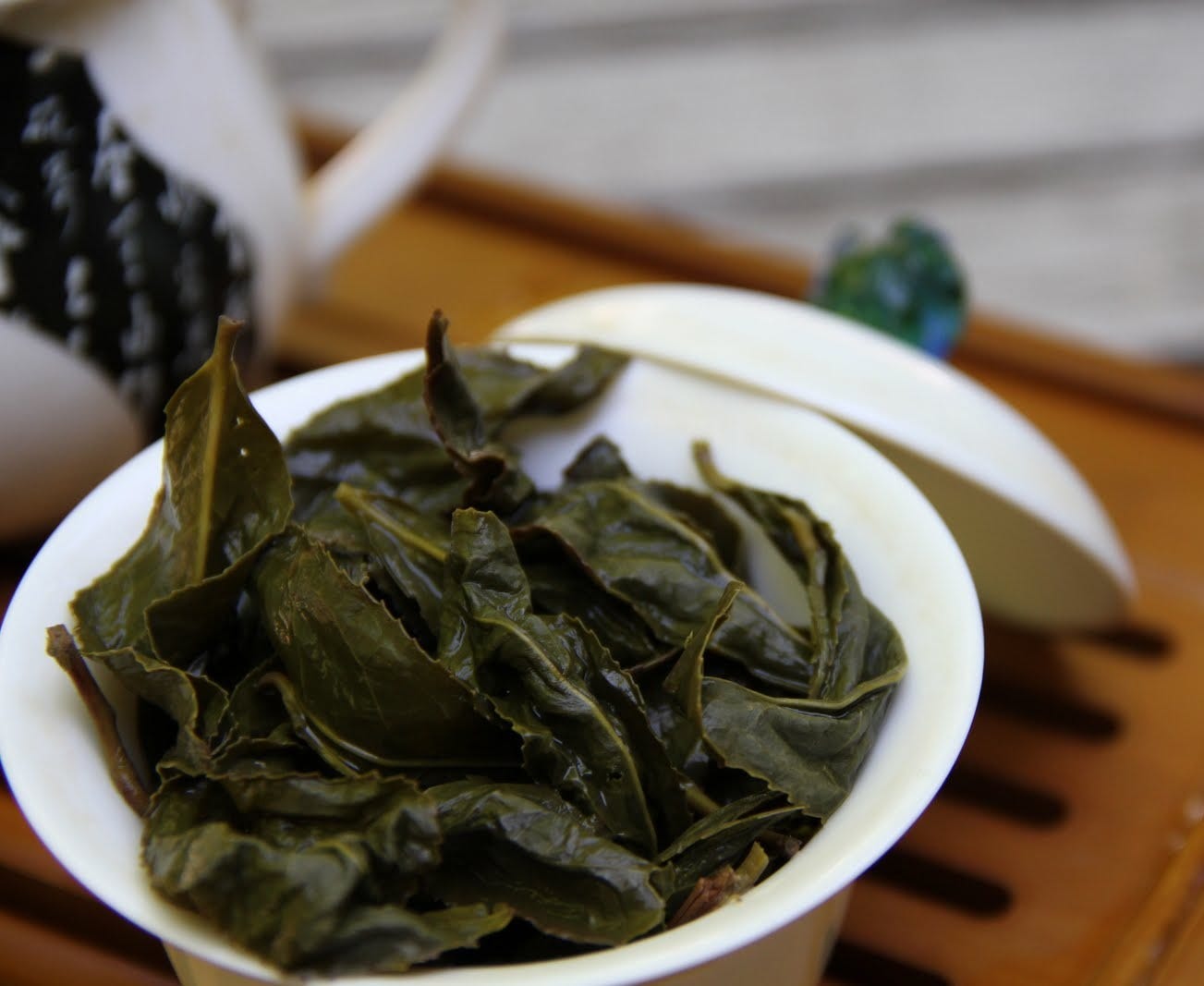
For better or worse, there’s already a precedent for renaming a tea category to suit Western markets. What the Chinese originally called red tea, or hong cha, was promptly renamed black tea by the British, presumably because the dry leaf, not the liquor, looked black to European eyes. The rename stuck so thoroughly that most Western consumers have no idea red tea and black tea refer to the same tea type. One of oolong’s traditional names is blue tea, or qing cha, a reference to the blue-green color of the partially oxidized leaf. It’s not quite accurate, but at least it lends something tangible to consumers. Heck, if North America can sell blue raspberry, why not blue tea?
My second theory is structural. Oolong is expensive and labor-intensive to produce relative to black or green tea. The partial oxidation that defines the category requires careful, time-sensitive monitoring during processing that’s difficult to standardize. You cannot automate your way to a good oolong the way you can with CTC black tea. Lower production volumes and higher costs mean less shelf presence, thinner retail margins, and fewer marketing dollars.
The other issue is available formats. Oolong traditionally includes larger, more mature leaves, and one of the genuine pleasures of drinking it is watching those leaves unfurl over multiple infusions in a gaiwan or a clay pot. That experience is incompatible with a paper teabag. Pyramid bags help, but only partially, and the brands selling oolong in pyramid bags are niche by definition.
I think the realistic path forward for oolong in North America is in ready-to-drink formats. Oolong brews cleanly, holds well in cold formats, and its flavor diversity makes it a natural base for sparkling teas, pure infusions, and fermented drinks like kombucha. The category’s depth and roasted variants in particular could ride the momentum that hojicha has built among consumers who want something beyond green or black. Roasted oolong and hojicha are not far apart in character, and hojicha has already done some of the consumer education.
Will oolong ever get the sustained commercial push behind black and green tea? Or is its destiny solely to cater to gong fu enthusiasts?
Are you a pre-revenue or early-stage tea founder seeking support?
The Steep Insights: Founder’s Circle is for you. Our members-only community supports tea entrepreneurs creating sustainable and scalable tea businesses. Membership starting at $99 per month could save you thousands of dollars and lost time. Check out the details here, or reach out at billy@bdhconsultants.com to learn more.
I, personally, love a great light oolong and my current favorite tea is a darker, "non-roasty" Chinese oolong. Because of the characteristics that you mentioned, oolongs also make a great base for flavored teas. I think another problem is that there is a large difference in color, flavor and aroma between the light and the dark. To the average consumer, they don't appreciate why it is called an oolong but what to expect when they drink it. They are going to get quite different cups from the different kinds of oolong tea and they do not understand that.
I feel like I ask myself this every time I hold a meeting for the MN Tea Society. It's difficult in this heavily coffee influenced / sugar crazed country to get people to really latch on to something that they consider not as flavorful because their palates are so use to an injection of insane notions all the time. Of course, we can't expect it to happen overnight... granted the matcha boom.... ooo... actually I wonder if we could use the matcha boom as a gateway... I'm going to make a bowl of matcha and ponder this while looking at things that could possibly grind oolong.