
Lorela Lohan Speaks Two Languages: Tea Brand and Tea Buyer

I was happily sipping coffee between mouthfuls of fresh croissant when Lorela arrived. It was a busy weekday morning at a cafe kitty-corner to the Bordeaux train station, buzzing with students, professionals, and jetsetters. She’d reached out to me on Instagram a few days prior, noting she was also in Bordeaux and eager to meet up. We were both on holiday, but meeting up with tea people always somehow takes precedence when the opportunity presents itself. We’d followed each other online for a while, the way tea people do, trading the occasional comment on a post. We didn’t have an agenda, but the conversation flowed immediately.
We gabbed for a couple of hours, both of us happy to disappear into tea’s nerdy sidequests, but the conversation skewed toward the practical side of tea economics, high-level tea trends in Europe versus North America, and go-to-market strategy. We’ve stayed in touch ever since that meeting last summer.
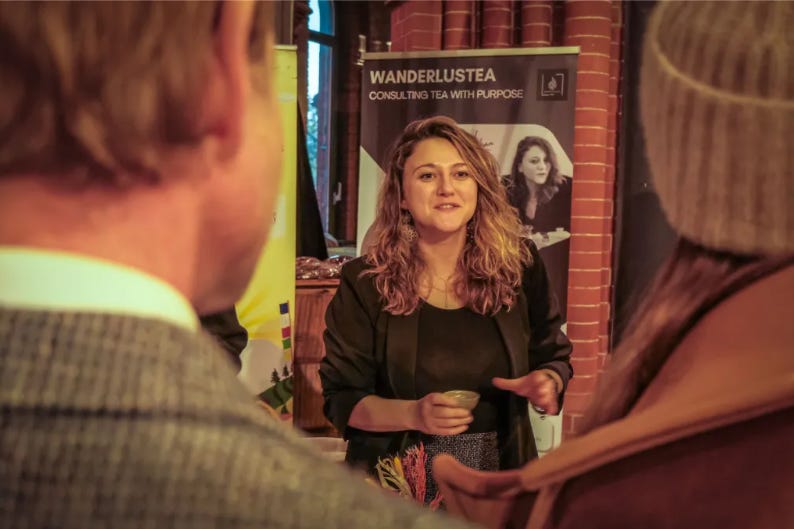
Lorela runs WanderlusTea, a Brussels-based consultancy that helps tea brands, domestic and foreign, find their footing in Europe. What struck me wasn’t her enthusiasm for tea, though that’s evident, but how unsentimental she was about what actually drives tea’s adoption. Customers don’t always need a lecture on terroir. Quite simply, they need an outcome, a reason tea fits somewhere in their already full day. Experience, function, flavor, and format can all be levers, but each requires the right communication behind it. That gap, between what a brand wants to say and what a buyer needs to hear, turned out to be the exact territory she covered a year later in a Steep Insights: Founder’s Circle live session on brand ambassadorship.
Her tea epiphany happened in a Prague teahouse in 2019. The Chinese owner served her exquisite teas, changing her perception of tea entirely. It snowballed from there, and her passion eventually led her to start a consulting practice helping brands grow in Europe. That origin sounds romantic, but she hones in on the practical side of sales and growth: logistics, pricing strategy, buyer relationships, events, tradeshows, and more. In her experience, sales rarely happen after a single contact with a customer. Relationships get built over months, through many different mediums. Tea is a long game.
Lorela represents tea brands. Is she an influencer? Not quite. She describes herself as a tea ambassador. Influencers give brands access to an audience, reach, awareness, content, all useful but not necessarily integrated into a sales process. A strategic ambassador is closer to a regional sales representative. She brings pointed market knowledge, fosters buyer relationships, hosts events, and scouts for opportunities. The specific agreements and needs of each client differ, though, so she stays adaptable to each one.
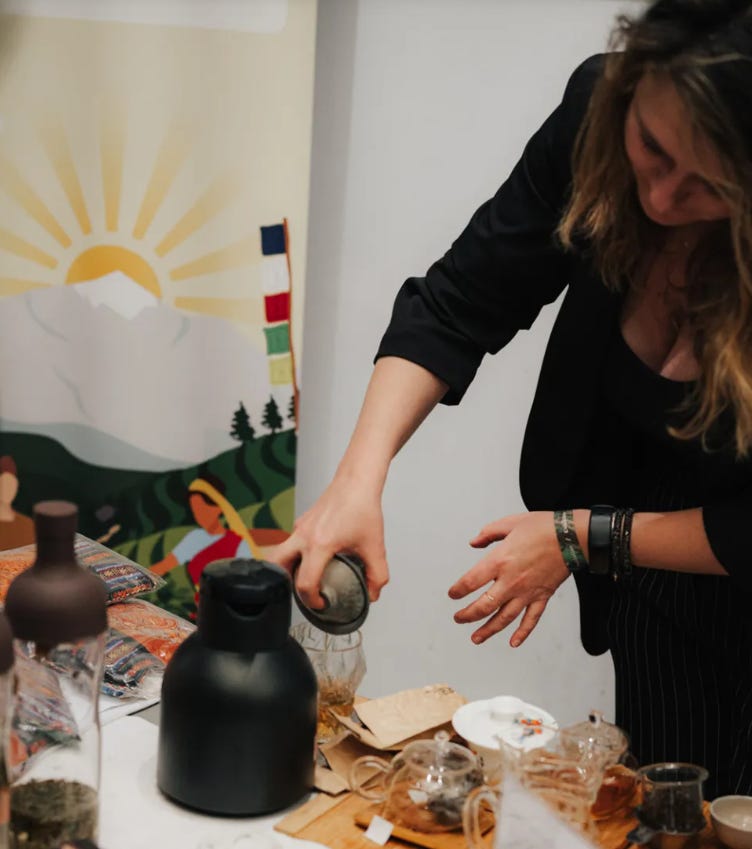
One company she’s currently working with is a regenerative organic tea brand seeking market entry into Europe with a relatively new product type. Low awareness, a high price point, and a product most consumers, even in tea, are unfamiliar with. Her proposed go-to-market strategy runs in three interconnected phases: driving awareness through events, building consideration through tastings and experiences, and tracking conversion through reorders. Sampling is an effective strategy for tea brands, but it’s rarely an immediate trigger. It usually takes several touchpoints before conversion.
Lorela hit on an important messaging disconnect that hinders so many tea brands. The brand speaks one language, but the buyer is asking in another. So often, tea brands lead with what they think matters and not what buyers actually want to know. Consider a wholesale tea brand seeking a deal to become the exclusive tea provider for a coffee shop. The seller might lead with origin, quality, and tasting notes, when the buyer’s real questions are about margin, preparation and operational flow, and consistency. Someone has to translate between the two, and that’s precisely the role a good tea ambassador plays.
Europe presents a distinct challenge of its own. Generalizing, adopting one strategy for the whole continent, won’t cut it. Each country has its own language, its own tea culture and habits, its own price sensitivities, and its own distribution systems. A brand that performs well in France might not bloom in Germany. Lorela approaches this with a ninety-day pilot structure: mapping the market and building a prospect list first, running outreach and tastings second, and tracking conversions and successful levers last to refine the strategy going forward.
Lorela is playing a long game, and she knows it. Building a new tea market rarely happens through one clever campaign. The growth is in the slow accumulation of small, compounding wins built over months and years.
If you’re weighing whether your own tea brand needs an ambassador or just a sharper go-to-market plan, Lorela’s site is worth a visit, as is her newsletter. She’s tucked something in there specifically for prospective Founder’s Circle members too, so if you’re thinking about joining our tea entrepreneur community, this is the right moment.